
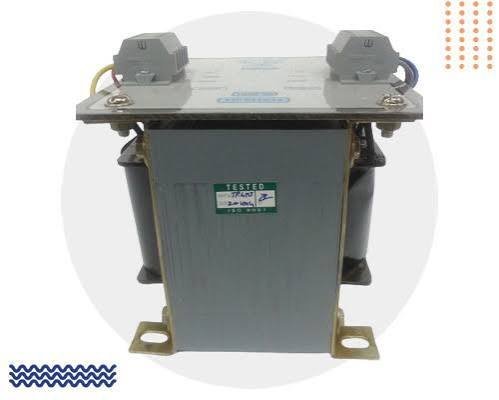
A paper mill, a welding shop and a residential tower all use electricity, yet they place very different demands on a transformer. Moisture troubles one site, sudden current peaks trouble another, and noise matters most at the third. A maker worth choosing studies the workplace before suggesting a design. That study shapes the rating, insulation, enclosure, and testing plan, so a few extra minutes spent on site details can prevent years of trouble.
Project teams that search for Transformer Manufacturers in India can prepare one site information sheet and send it to every shortlisted firm, which makes offers easier to compare fairly.
Five Industry Needs a Leading Maker Should Understand
1. General Factories and Production Units
Factories often run motors, compressors, conveyors, and machine tools from the same supply. Starting a large motor directly can draw several times its normal current, which may pull down voltage for nearby equipment.
Prepare a load list that shows each motor, its starting method, and which machines start together. Add planned expansion. This gives the designer a realistic view of peak demand and helps avoid both overheating and wasteful oversizing.
Common choices include three-phase units for main power and control transformers for panels. Keep welding sets and sensitive controls in mind as well, since sharing one supply may disturb readings and relays.
2. Paper Mills and Damp Process Areas
Paper production brings heat, vapour and fine fibres. Dust settles on cooling surfaces, while moisture weakens insulation over time.
Discuss the exact installation point with your supplier. A suitable enclosure, protected terminals, good ventilation and corrosion-resistant finishing deserve attention. Maintenance staff should have enough room to inspect and clean the equipment after safe isolation.
Process drives may also create harmonics, so mention every variable speed drive in the enquiry. Continuous running is another factor. A mill that operates through three shifts leaves little time for cooling or repair, which makes sensible thermal margin and planned inspection important.
3. Welding Workshops and Fabrication Units
Welding current rises and falls repeatedly. The duty cycle shows how much of a set period the equipment works under load. A 40% duty cycle on a ten-minute basis, for instance, means four minutes of welding and six minutes of rest.
A transformer selected only on average load may suffer from voltage drop. One selected only on peak load may become needlessly large. Share the peak current, duty cycle, number of welding points, and the chance of simultaneous use. Cable length from the unit to each welding point is useful too, because long runs add to the voltage drop.
4. Automation and Control Systems
Programmable controllers, sensors, and relays react badly to unstable supply. Isolation transformers can separate sensitive circuits, and control transformers provide the voltage needed by panel components.
Drives often benefit from chokes. An AC choke placed on the line side helps limit current distortion and sudden surges. A DC choke smooths ripple inside the DC section. Our range includes both, so the drive maker's recommendation can be shared with us along with the transformer requirement. Route signal wiring away from power cables and follow the drive manual for earthing.
5. Apartments and High-Rise Buildings
Residential sites care about safety, sound, space, and uninterrupted common services such as lifts, pumps, and lighting. Indoor installations call for close attention to fire rules, airflow and access for servicing.
Dry-type designs are often considered indoors because they contain no insulating oil. The final selection should follow the electrical consultant's drawing, local authority requirements and the applicable Indian Standard. Think about night-time noise near flats and offices, and keep the room clear of stored material that blocks airflow.
Large building projects also depend on timing. Contractors considering Transformer Manufacturers in Bangalore should check dispatch time, route, unloading access, and service response before fixing the commissioning date.
Matching the Site to the Specification
Each setting has one concern that should lead the discussion. Factories need attention to motor starting, so send the load and starting list. Paper mills face moisture and fibre dust, so describe the installation conditions. The welding machine faces variations in current, and hence the peak load and the duty cycle become essential. The automation machine requires a constant and clear power source, depending on the panel and the drive information. The high-rise project is concerned about safety and sound levels from the drawings of the consultant.
Questions of Quality and Location
Industry knowledge should be backed by records. Ask for routine test results, current certificates, and warranty terms. Certificates on our side cover quality management (ISO 9001:2015), environmental management (ISO 14001:2015), CE marking and RoHS.
Local buyers gain from direct technical talks. If you are studying Transformer Manufacturers in Pune, ask who will review your drawing and where production takes place. Production for our orders takes place in the Pimpri area of the city.
Build Around the Work, Not a Catalogue
The right transformer reflects the conditions it will face every day. Tell Trutech Products about your industry, load pattern, and installation space. Call +91-9823081484 or email trutech@rediffmail.com to discuss a design that fits your site.
 Get A Quote
